The Industry Hinges on Apple: Unfolding the Next Era of Devices
Table of Contents
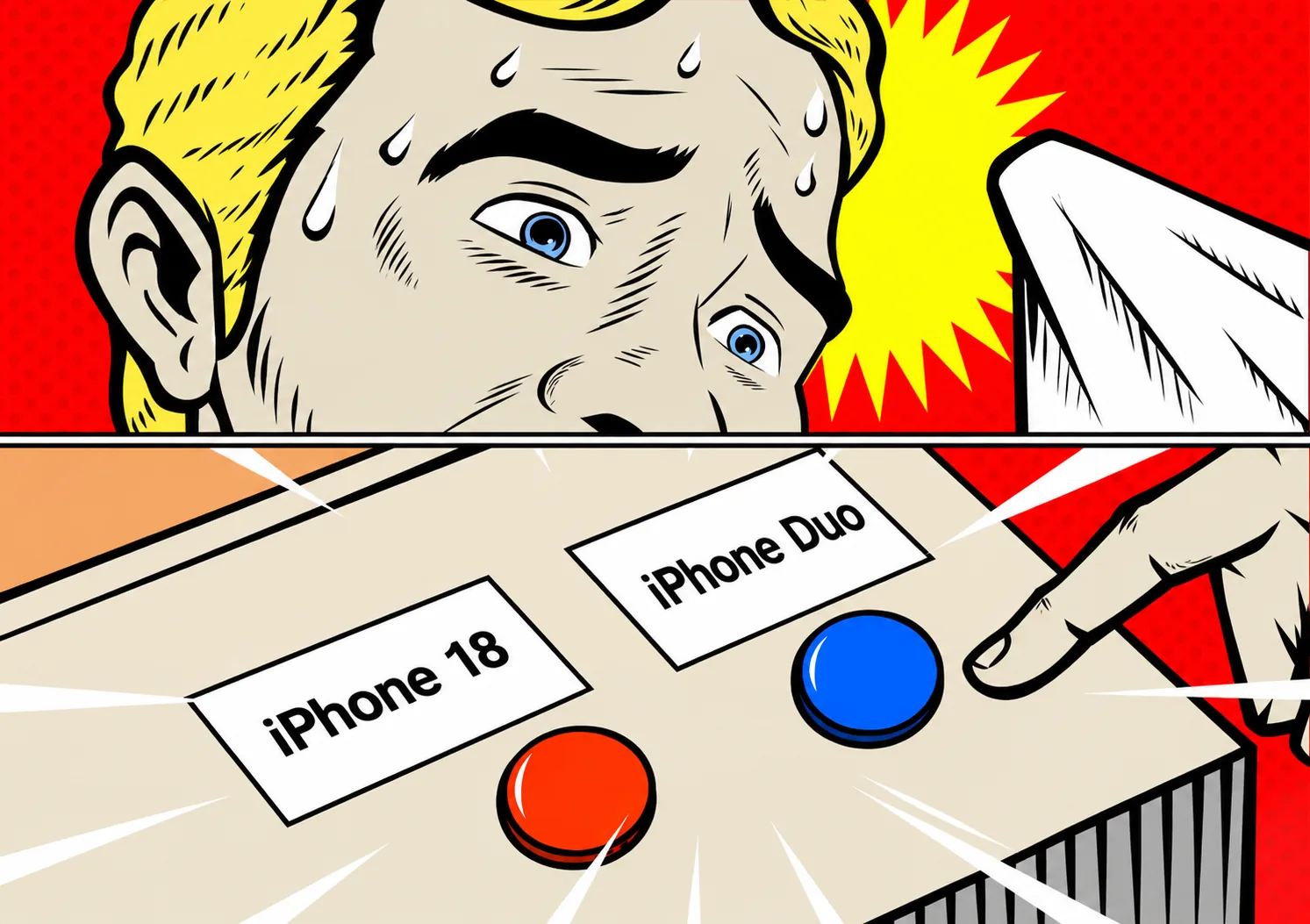
I opened the iPhone Duo page and the phone unfolded on its own, a 5.4-inch cover screen swinging through a shallow arc until it lay flat as a 7.6-inch panel, the wallpaper running across the seam without a break in it.
The choice is simple #
The iPhone 18 Pro reuses last year’s body, close enough that OtterBox sells one case for both models. Apple has run this script every September for a decade. The camera improves, the chip gets faster, the battery lasts longer, and you upgrade when your battery health slips under 80 percent or your carrier makes the math painless. Good phone. You can write its review before you hold it.
Five weeks later Apple ships the first iPhone that changes shape, for $800 more.
Eight years of Samsung, one keynote from Apple #
Samsung built this category out of nothing. The Galaxy Fold arrived in 2019, and before a single customer took delivery, reviewers broke five screens inside the first two days, among them writers at Bloomberg, CNBC, and The Verge. Samsung recalled every review unit, delayed the launch, and shipped that September anyway. Then it kept going through eight generations of Fold and seven of Flip, fifteen core models across two form factors, taking another round of crease jokes each summer while Samsung Display learned to build a panel that survives the 200,000 folds its own test rig demanded.
Count the runway. Samsung built its first flexible-display prototype in 2011 and spent eight more years getting one into a box a customer could buy. Its own newsroom calls the Fold a decade in the making. Fifteen years past that prototype, Samsung Display is putting 67 trillion won, near $47 billion, into OLED and next-generation display lines at Asan and Cheonan, and a dedicated foldable line there is rated at up to 15 million panels a year. That is what inventing a category costs, and it does not count the eight generations of skeptical reviews Samsung had to walk through in public.
I think Apple is grateful for every won of it. Samsung ate the prototype years, the recall, the yield problems, and the crease jokes, then handed Apple a mature panel process and a buying public that already knew what a foldable was. Apple has never needed to go first. Apple needs the category to exist so it can build the best version of the thing, which is the only move Apple has ever run.

It’s in Apple’s DNA that technology alone is not enough—it’s technology married with liberal arts, married with the humanities, that yields us the results that make our heart sing.
Steve Jobs, introducing iPad 2, March 2, 2011
It’s 2007 all over again #
Samsung and Google now have to answer a device where one company designed the hinge, fabricated the silicon, specified the panel, wrote the operating system, and then put taste on top of the whole stack. The industrial design, the interface, and the way the thing feels opening in your hand all came from people who answer to each other. Samsung’s design screams committee.
That was the shape of 2007, when Apple introduced the iPhone and changed the world. Nokia, BlackBerry, and Motorola held the phones, the carriers, and the market share. Apple held the whole stack, and inside two years it had finished the argument.
Cook’s last roadmap #
Tim Cook handed the CEO job to John Ternus on September 1 and moved to executive chairman. Ternus, who ran hardware engineering for years, walked on stage eight days later to introduce the first iPhone that changes shape, calling it the most transformational change to iPhone since the original.
Cook announced the handoff in April, saying Ternus has “the mind of an engineer, the soul of an innovator, and the heart to lead with integrity and with honor.” In April I read that as a gracious exit note. After watching the Duo open, I read it as a chief executive describing the engineer who built the product he knew was coming.
Fifteen years, $350 billion to $4 trillion, and a foldable iPhone closing out his run. What a high to leave on.
Preorders open Friday, October 16. It ships October 23. I already know which button I am pressing.